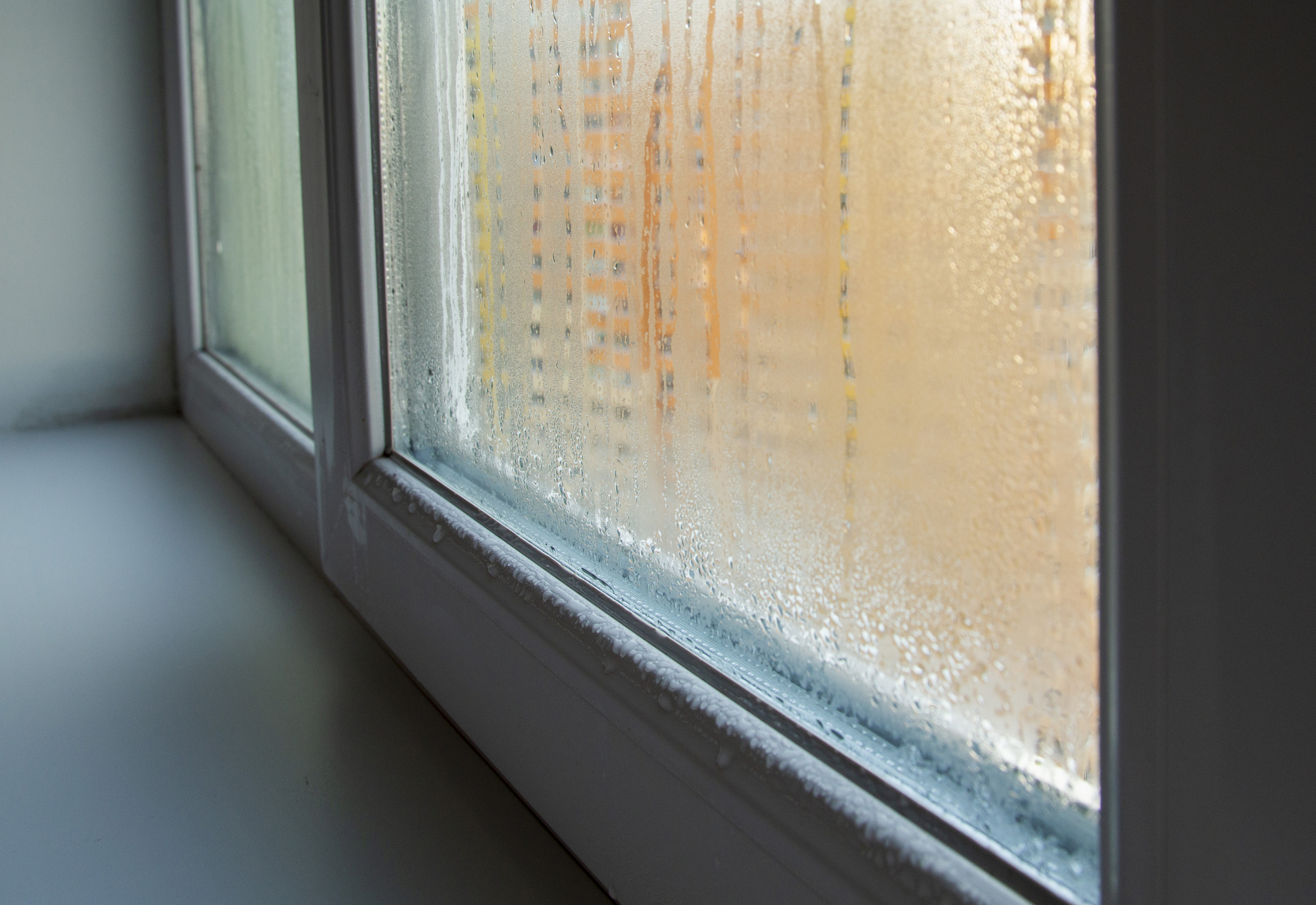
Condensation is probably the most common form of dampness in buildings. This is how condensation forms:
1
Warm air holds more moisture than cold air
2
When warm moist air comes into contact with a cold surface (e.g. an exterior wall, window) it reduces it’s ability to hold as much moisture
3
Moisture then condenses back into a liquid
4
It condenses as:
Surface droplets (on impermeable surfaces such as glass and bathroom tiles)
Damp patches (on permeable surfaces such as curtains)
5
Condensation can then lead to mould growth
Timing
Condensation most likely to occur in cooler months - between October and April.
Mould Growth
Typically occurs where airflow is poor. Places like corners, behind furniture, built-in cupboards, impervious surfaces e.g. Upvc windows.
How to identify condensation?
The air in your home contains varying amounts of water vapour which is invisible to the eye and is formed when you breathe and when you carry out normal daily activities in the home. Condensation is caused when this water vapour comes into contact with cold surfaces and condenses to form dampness or water droplets.
Did you know?
A family of four can add moisture to the air equivalent to 30 to 40 litres of water a week just by breathing
Showering, cooking, bathing and washing can add 15 to 20 litres a week
Drying clothes indoors can add 10 to 15 litres a week
Reducing condensation
There are four things to consider when dealing with a condensation problem – heating, insulation, ventilation and excess moisture. Find out more on how to deal with condensation using, by clicking the link below.